How to
Fix Vendor Sprawl & Optimize Network & Security Incident Resolution
Ready to see and control all your ISP, SD-WAN, SASE, security, and hardware inventory/telemetry in one place? (All backed by a dedicated, proactive, 24/7/365, on-demand, Tier 3 NOC/SOC tandem that's free of charge.)
Webinar Transcript
Mason: I'm gonna start off with, uh, maybe a little context.
You know, I've, I've spent my career in network service provider sp- uh, in, in network service provider space. I've worked for global billion-dollar companies, the third-largest network provider in the world, um, and, and also a number of aggregators where I have basically listened to customers for, uh, going on two decades t- about the problems that they experience.
And I think I'm gonna start off with an apology. Um, not for anything that CommandLink has done, uh, or that I've done personally, but for the failures of our industry.
We think that, here at CommandLink, we think that the network service provider space has been very stagnant from an innovation perspective, and that overlaps a period of time where the network today is more important to business than ever before. It's the connection to the application layer. Your communications run on it, so it's your communi- your connection to the customer.
Uh, business and, and AI is only gonna bring a multi-factor accelerator to that.
And we, we believe that IT, uh, uh, the landscape of responsibility that you have to secure the business, have technology be a technical, uh, competitive advantage, that, um, IT needs simplifi- simplification of responsibility.
And historically, uh, businesses have had two choices for building network strategies.
You've been able to, um, go to each location, find two different ISPs usually, sometimes three these days, for tertiary is becoming very common for CommandLink, and basically stack two to three vendors per location, which creates a, a problem we call vendor sprawl.
And those problems are a problem with inventory management of services, problem with getting, you know, ac- you know, helpful support. Uh, you're treated like a number. Uh, just, uh, uh, escalations are common, and support is one of the lowest bar, like, C-STAT ratings of any industry, full stop.
Um, the other option that's been available is working with an aggregator.
Now, I've, I've spent the last 15 years, uh, working for different aggregators in my past life, and what we wanted to build here at CommandLink is a, is a company that can solve the problems that I experienced through that past life.
So my goal for, for this conversation today is explain what a modern- And, and smarter network strategy looks like to give time back to IT, to re- uh, reduce downtime, to, uh, be cost-effective and set projects up for success so that your business can, can operate, uh, even when, um, you know, a telecom blip might happen.
So, so let's start w- off with this.
There's over 5,000, uh, ISPs in CommandLink's portfolio. Uh, th- e- even if you're just domestic only, there's a lot of, uh, kind of up-and-comer ISPs that have, have become a very good option, uh, with very strong fiber assets and things like, like that.
So, um, I think the first thing is, is, is knowing how to, to find some of these solutions is, is really a advantage.
We, we have, uh, kind of obscure ISP vendors that we've had service in place for up to 30, 40 billion dollar, you know, businesses that have been rock solid from an experience perspective.
And the, the strategy of sourcing vendors is complicated.
Um, the, you know, there are some tools in the market like ConnectWa- ConnectBase and, and others that give some site-level intelligence, but knowing, knowing which ISPs are within range of your locations, even obscure options that you may not see on football, uh, TV commercials, is, is definitely a, um, a benefit.
Uh, and, you know, so working with a vendor that has that level of a r- a Rolodex is pretty, pretty crucial.
Now, when a, when a quoting process begins, that's where a lot of your cost optimization and your, your cost savings can happen, and it's not just on the MRC monthly cost or the install price, it's actually on also nego- negotiating away from build waivers or construction costs.
And I'm gonna talk about that, uh, a, a little bit specifically.
Even if you have 5 or 10 locations, we work with customers that start about there but go up to dozens, hundreds, thousands of locations, up to the Fortune 100.
There is real money that can be saved both on the ongoing opex monthly cost, but also in getting the ideal service into the location with the carrier funding the, the build costs.
Uh, so that r- that negotiation has to happen upfront. We call it a project negotiation.
Uh, a- and it's important to use your, your locations that are lit or have service in the building today, um, to help offset services that are not lit or that are near net.
So this is, this is something that w- whoever you're working with from a network service provider's perspective, they need to be having this conversation out of the gate.
Even if you're only looking for, you know, one or two locations right now, um, this is a strategy that over the, the, you know, y- years to follow can help really, um, provide some real cost savings.
Um, okay, so now, now you've identified what services you wanna order.
Um, the problems that we s- we have seen in our past lives with project management or getting services installed is, quite frankly, project managers that are very reactive, not proactive.
Uh, they run their deployments out of Outlook and spreadsheets rather than software. They often miss deadlines. They don't communicate very well.
Um, you know, you'll jump on a weekly call, and they won't have very good updates, and, and things just take too long. That's generally the, the reality.
So what we've done with our system, uh, so this is something you wanna look with in, in whatever network service provider partner you're gonna choose, is having software that's customized both per vendor and also per product based on the nuances of those workflows.
Every s- ISP has kind of nuances in how services are ordered, deployed, and installed.
Um, capturing those and building that into software workflows is, is the litmus test of a modern, um, aggregator or network service provider.
And the, the goal of that is to reduce the amount of, um, time, timeframe in getting things installed to reduce the burden on IT, and also just make it easier to get things installed.
Now, um, when the ISP installs the service, they won't touch your LAN.
So m- a lot of our customers, I'm gonna say most of our customers, even Fortune 1000s, have centralized IT, at least at some level.
So when y- you have a service there, but it's not connected into, into your LAN, your edge equipment, and it's not into production, the question is, is how do you get it there?
Well, um, there's a lot of vendors you can go to that have smart hands that can come on site, do a DMark extension, a LAN cut-over, uh, maybe help in installation of, of an SD-WAN device or two for HA, switching access points, even other--
We, we do, we have retail customers that we do point-of-sale installs for.
So having a, a partner, uh, of some type that has a very smart hands, uh, robust capability becomes pretty critical for a lot of, a lot of centralized IT teams.
The goal is to keep you guys in the office not traveling, and we have a, um, a, a really big, big practice globally.
Uh, it's like a hund- over 150 c- uh, countries now where we can help with that. Uh, okay, so now things are installed.
Um, I'm gonna talk about a pain point that, uh, the, CommandLink is leading a small number of, of providers in the world, very small number, that can actually help with another pain point for IT.
So you have an outage. Um, th- step number one with almost every ISP globally is do a reboot, have you check power, um, verify cabling and lights. Well, when you don't have IT at every location, that becomes a hassle.
Uh, getting someone non-technical to go into the server closet, start unplugging things, and, uh, and, uh, playing with the LAN equipment, uh, will cause problems, um, at scale.
So, and, and according to our stats and some other, uh, stats that we've collected, about one-third of NOC tickets are layer one caused, meaning a loss of power to the building, um, a bad cable, or handling through a reboot.
So what CommandLink has done is first we built a network of APIs to the power grid across all 50 states.
Uh, it's not global yet, but we're, we're working on that, where we can API the utility company when we see a service go down and report that back to our customer in the ticket whether the building has power according to the local utility company.
The other layer of power management besides, you know, API to the, to the grid, is also remote management for power. And this not only gives us cloud visibility to whether there's power to the building or not, we also can do a reboot of hardware through this, and that reboot can be done o- on demand by you, on demand by us, or built into our automation. And so when you put those two things together, we've essentially taken care of the layer one verifications for you.
There is a very small number of companies that are doing that full, um, uh, I'm gonna, uh, probably count them on one hand globally. Uh, CommandLink was actually first to, to get the power grid API. Uh, very proud of the innovations we're bringing. But this is another area that where country- where companies that have centralized IT, we're giving you time back, and you literally don't have to do anything when a service goes down.
So, and let's talk about that.
So the goal is to get you off the hold time when there's an outage. And what we do, um, what, what, what you should look for, uh, and what CommandLink does is we monitor every network connection, and we monitor services that are also not sourced through CommandLink.
We have a product called ISPLink that is integration into our IT soft- software platform of a service not provided by CommandLink, and any service we provide through our wholesale partnerships globally comes with monitoring.
The monitoring is one year of history. Um, we, we at least have latency, uptime, and ping. Uh, we also have device and software solutions for cap- capturing SNMP, uh, which gives us utilization and packet loss as well. Um, around all those interfaces, we have alerting capability, so we can alert you, um, through the channel that you desire. Uh, email is the default, but also SMS text, automated call, and also API. More on that in a minute. Uh, so we can alert you through a custom o- custom omni-channel delivery of an alert. We create tickets automatically, um, and then we feed that to our NOC, and our NOC is, is a game changer. I'll talk about that in a minute.
But- Um, before you go on, um, Mason, we have a question in the chat. I love it. It's, um, "What options do you leverage for remote power management?"
Yeah. Um, w- it's actually kind of a proprietary solution.
Now, um, we are using an aftermarket box, and the, the, the name of that escapes me. Um, I'm happy to share that with you if you just message David. D- uh, we can, we can grab that from our engineering team.
We... There's a variety of different models available. We did a, we did a, kind of a wide search. Um, this was about, uh, a year and a half ago or so, two years ago. But, um, we chose, we chose models that not only, uh, give us the ability to have two and eight-port versions, but also that are cloud orchestrated.
And why that's important is, um, when, when it... Let's say you have a location that has a conduit cut, um, both circuits go down. You have a primary and, and a redundant backup.
It still allows for an automated reboot when it loses connectivity to the cloud orchestrator.
So it i- um, again, I don't know the name. Apologize about not, not having that answer off the top of my head, but we can definitely g- give that for you.
And we have l- LTE connectivity options to that as well. LTE 5G, 5G unlimited, all, all the flavors of wireless.
Yeah, thanks for the question. I love questions, by the way. Okay.
So what we're talking about here is letting you know when a circuit service has a problem l- through an a- an alert through the right channel to the right people- And the alert can go to both centralized IT and even a local contact if you so desire. Um, we're creating a ticket automatically and feeding that to our NOC.
The other, the other problem with our industry, why, why I started with, you know, an apology for our industry, is almost every company CommandLink competes with has the legacy approach to support, and it has not changed in decades, back to the T1M to MPLS days or beyond.
And what I'm talking about there is it's a, it's a call center tiered structure where the front line for getting ac- like, help on the network when you have a problem and it's urgent, is an 800 number to a hold time to a tier one call center rep who is gonna ask you for an account number, a circuit ID number, and tell you to reboot your, your device and check, check power, and that's about the extent that they can help you with.
Um, to get to someone more technical is an escalation. Sometimes you have to wait four hours for that to happen. Um, sometimes they give you an escalation list, which in CommandLink's opinion, is a written commitment that their support is going to fail you.
And, um, the, the most that they can offer is ping monitoring.
Uh, that often fails to create a ticket, and then when it does create a ticket, it's still going into the black hole of the NOC.
Um, escalations are by definition a failure of process. Um, CommandLink has a, a completely different philosophy where an escalation is a disciplinary issue, but we accomplish that through, through a very different support model.
So I strongly, uh, encourage all of you to consider if you're looking for better support, don't go to a company that has the same legacy model, otherwise you should not expect a different outcome.
So what CommandLink does for NOC support is we give every customer a dedicated tier three engineer pod. Um, the pod is staffed 24/7. Every member of the, of the, uh, pod is a tier three engineer. Uh, we are about 90, 95% d- domestic US-based, but we, we, uh, we do have some NOC resources for our global customers where we're bringing in language support for APAC and, uh, you know, Mandarin, uh, becomes very difficult for customers who have locations in China.
But, uh, 99, 95% US-based support with 10-minute or less SLA for engagement on every ticket 24/7.
So think about how nice it'll be to be able to open up a ticket, have a tier three engineer who is familiar with your account, who can technically help you, and who is accountable to whatever that ticket is regarding, and, and able to solve that for you.
That's CommandLink's, that's CommandLink's value is software enabling dedicated resource to give a better outcome.
A different model, yes.
More expensive, yes.
Um, that, but we've figured out how to scale our business.
W- I think we're the fastest ever to 100 million in, uh, in revenue in our space, while proudly being privately held. Um, this is actually very scalable. Uh, it's just, it's a little bit more expensive of, of a model. So look for a company that is investing in a different support model that can e- equate to a different outcome than what you've seen with incumbent providers.
S- so now we have all these services, and we're iniv- we're integrating them, we're inventorying them, we're monitoring them, we're, we're logging alert history for you, opening up tickets. A lot of you might have an IT ticketing system where jumping into a carrier, uh, portal or platform, as we call ours, is th- the path.
But what about if there's a better way?
What if we could keep you in your IT ticketing system, arm you with complete, uh, API solution to, to ticket syncing, but also arm you with service inventory reporting?
Where in your service now, when you have a, uh, problem with a service, whether it's a CommandLink service or a third-party vendor service, you could have the IP addresses, the, the ven- third-party vendor account number, circuit ID number, 800 number for their support line if we're not handling support for you.
Um, you could have that built into your, into your ticketing system, where everything your team needs to support your environment is actually right there in front of you inside your app. Well, that's, as a software company turned into a service provider, that's what we do here, and we have a growing library of integrations. Um, as you see on the, on the screen, the two that are kind of still coming are, uh, Fresh is almost done. Zendesk and Ivanti are coming. The rest of them are, are done in- integrations. ServiceNow is probably most common. But there is a, a huge amount of value to getting better data into your ServiceNow. We even have a, a couple enterprise customers where they want us to be the hub to connect their SolarWinds to their ServiceNow and, and help them with ticketing through that, uh, uh, connection as well. So an- another key value and, and something that, that we think, uh, for some of you that are pretty dedicated to an IT ticketing system can add a lot of value.
So-
I, I think the question, the question for you is th- there's a lot of complexity in doing this the right way.
Um, finding vendors, knowing how to negotiate, knowing how to manage their service delivery process, how to, how to have the, the clout to get, you know, support and, uh, a- and basically all the other software capabilities that I'm talking about. Um, th- this is a complex endeavor. And these days even the Fortune, uh, w- we work up to the Fortune 100, we're, they're, they're asking for management help. They're going to, they're dumping, you know, long-term engagements with the AT&Ts, Comcast Spectrums, Verizons, Lumens of the world, and engaging n- kind of next generation providers like CommandLink that can really do things, uh, uh, in a, in a different way.
And by the way, all of this, and I do expect us to be cost competitive.
In fact, the vast majority of our engagements are a significant cost reduction over current spend and cost competitive against competitive providers that we have to compete with.
So we do expect us to be very cost, um, friendly wh- while providing all of this other value, time savings, and reducing the, the frustration that IT has to deal with, uh, on a, on a daily basis.
Um, we would encourage you to s- to see a CommandLink demo. Uh, my, me and my team, David here on, on the call, can arrange that for you.
And w- what you'll see from us is a, a full live demo of our ITSM software and automation platform, how we inventory all these services, the monitoring that's native in there. Um, y- you know, what your, what your life can be like with a, a more modern approach to building a network. And the other thing that CommandLink really is exceptional with is support. It is dedicated support along your entire journey.
I talked about the Command Pod, um, for your dedicated NOC team made exclusively of tier three engineers. Uh, we'll also give you a dedicated service delivery team for life, not only for any i- initial deployments but for any moves, adds, changes, upgrades, renewals. Um, give you a dedicated account manager, a CSM that, whose job, I own this team as well, uh, close to 20 people just focused on keeping customers happy, not on sales quota. And even a dedicated billing contact. Um, didn't really talk about billing too much, but, uh, just a quick note on that. Clean billing is the rare exception. I'm sure some of you are probably chuckling to that.
Billing problems are legendary because the systems that run carriers are atrocious and numerous. Uh, we have very clean billing, uh, custom billing available, even adding a growing list of global currencies for those of you that might have, uh, international locations. And then the platform essentially ties everything together in one amazing interface. And I think the other, the last piece that I'll say is CommandLink is not just a, a network aggregator.
We are a, a platform that is ingesting connectivity, yes, but we have also a growing library of integrations for SD-WAN, security, uh, uh, switching, Wi-Fi.
We're collecting all the monitoring analytics and APIs off of those platforms, wrapping our analytics, uh, AI throughout our platform, uh, you know, building, uh, in, uh, customized alerts and ticketing and, and then again able to, to display things into your IT ticketing system.
So if you wanna see CPU and memory on your, or, or an alert on CPU and memory on your edge hardware when things reach a certain threshold and be proactively notified, like those are the types of things that CommandLink is doing in bringing in a lot of the edge, you know, switch, access points, other LAN equipment into a single pane of glass as well.
And that, that completes the, the presentation.
Again, this is, uh, this is actually the CommandLink platform here. It's a, it's a demo customer ins- instance.
Uh, so if you were to arrange a demo through OneTel, uh, this is what it would bring, the ability to integrate all those services, the ability to, um, have a, a global single pane of glass for all of your network assets, and we can do that in as little, little as one to two weeks, um, after an order is placed for managing connections that you have today.
Um, once connections are integrated, again, it's one year of history with a, a lot of rich analytics.
We inventory everything about the service, including IP addresses, contract dates, demark location, circuit ID numbers.
We have about 75 available fields in that, uh, section right there. Um, one click to an easy ping test even.
Um, so everything in your network in a single pane of glass wrapped around with automation and even the ability to layer on CommandPod support to your existing connections while offering a cost-effective path to replace those connections when contract terms come to maturity.
So, um, would love to go deeper on that and talk about your network, um, your problems, and how we can use software and dedicated resource to give you and your team more time back and a better experience for your internal users in your company, um, in general.
Do we have any other questions that I can answer?
Hey, Rick.
Rick: Hey, that was great.
Thanks for, uh, going through your platform and, you know, all the advantages of, of this model.
So, yeah, appreciate your time and I think we all learned a lot.
Um, yeah, it's, uh, it's been great to kinda walk through an alternate, um, option in, in terms of technology and approach.
And, uh, you know, we've seen that, you know, clients that deploy, you know, a solution on your platform really get a much different experience in terms of, you know, get, you know, tier three engineers on the phone, a lot more visibility of the network with the proactive monitoring and notification, that kind of thing.
And that's just not really out there. Like, the carriers don't really do that. So you're kinda like the un-carrier, right? Uh, someone probably took that, right? Someone stole that.
Mason: Tech carrier. Yeah. Yeah. In a lot of ways.
Anyway, yeah. Yeah.
We're, we're, uh, fighting paradigms and change- changing expectations and, uh, th- these days with the technology that's available to us, it's, it's just, um...
These companies are slow to evolve.
Uh, you know, a company-- Think about a company that's, uh, multi-billion dollars that has 25 systems that run the business that don't talk to each other. You know, they're not gonna be able to, to i- innovate like a CommandLink can.
A company that started as a software company, um, had a C-suite come in that had built and, and scaled one carrier back in the T1 and MPLS days and, um, you know, taken a modern approach to these problems.
So, um- Yeah ... rather be leading.
Rick: I think, I think the number one thing we see is just people, you know, that have obviously multi-site, multi-location, multi-state or even, you know, n- nationally based, it's just, um, really difficult with the vendor sprawl and, um, really, you know, y- you start with two and then all of a sudden you've got 20 different vendors.
So I think that's, um, another big advantage, right, to, to taking a holistic approach through your platform.
Mason: Without spending more money, yeah. That's- Yeah ... that's the key is still- Yeah ... still probably saving costs over your three or four-year-old pricing and, uh, just doing things in a better way.
Rick: Yep. Awesome.
Derek: Okay. All righty. Well, um, I think that does it for questions on this webinar.
Just a reminder, um, to receive your gift card, you'll need to fill out our exit survey. That should pop up in your browser right as we end the webinar, so if you don't receive that, feel free to email me, [email protected]. You should have seen my email in the confirmation email you received for this webinar.
But other than that, I think that's everything.
Thank you, gentlemen, for your time. We really appreciate it.
Mason: Thank you as well.
Derek: All righty. Goodbye, everybody.
Rick: Bye.
Mason: Bye.
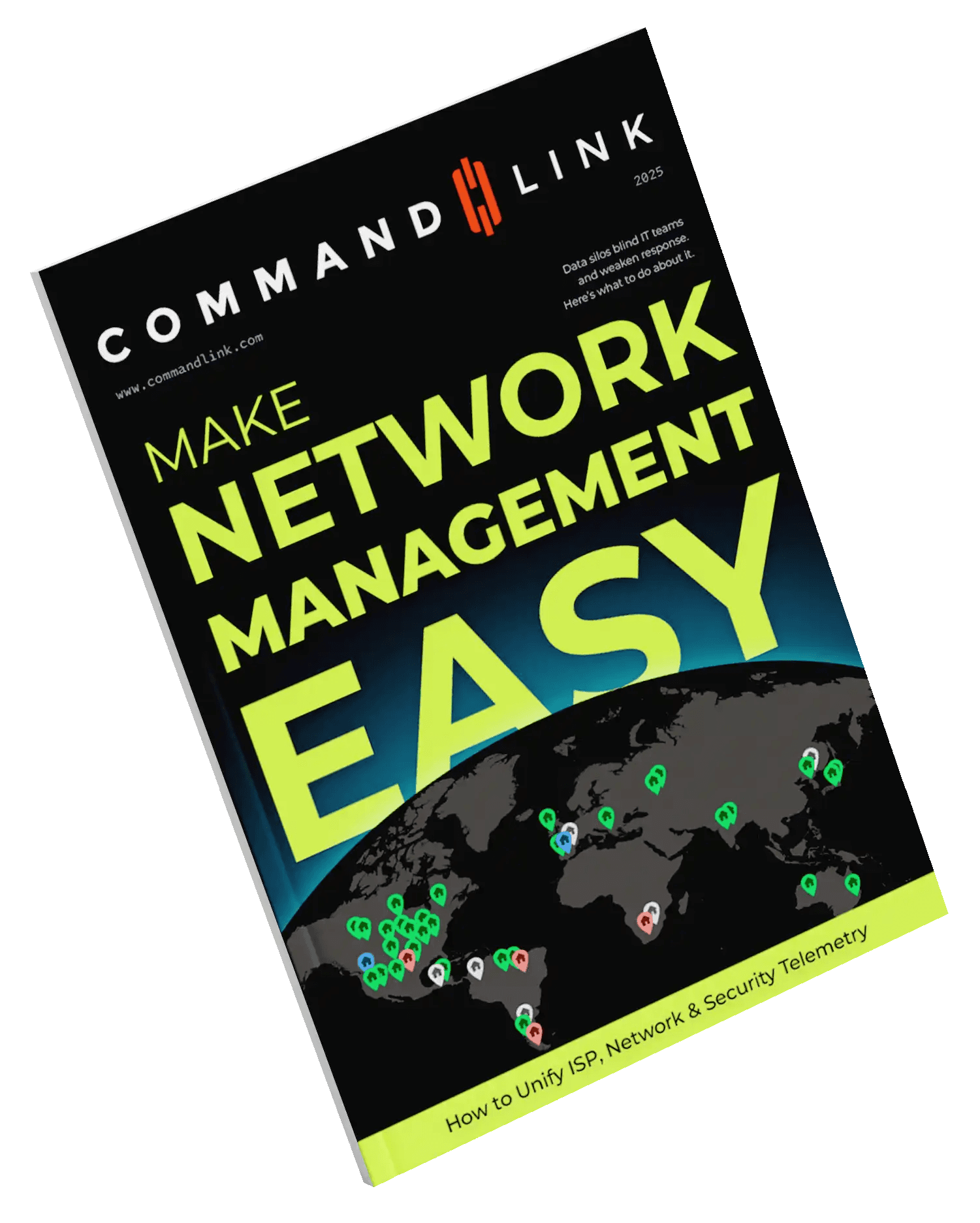
Get the Framework
Elite IT Teams Use to Eliminate Blind Spots
Advanced strategies, real-world use cases, and what actually works to achieve 100% uptime.